

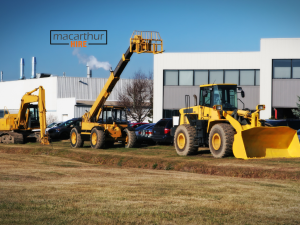

An excavator becomes much more versatile when it is paired with the right attachment. While a standard bucket may handle everyday digging, a trenching bucket, auger, ripper, rock breaker or grading bucket can make a particular task easier and more practical.
The attachment must still suit the job, ground conditions and excavator. Choosing one based only on its name can result in a hole of the wrong size, a rough finish, slow progress or equipment that cannot be fitted safely to the available machine.
If you are comparing equipment for rent, start with the result you need rather than choosing the excavator first. This guide explains what common attachments do, where their limitations begin and what information to give an equipment rental company before booking.
Begin by describing the task in practical terms. Digging a footing, opening a narrow drainage trench, drilling post holes and leveling a driveway are different jobs, even when they take place on the same property.
A general-purpose bucket can handle ordinary excavation and loading. A narrower trenching bucket may be more suitable for pipes, cables or drainage channels. An auger creates round holes for posts and footings, while a ripper can loosen compacted ground before it is removed with a bucket. Rock breakers are designed for hard material, and wider grading buckets help shape or finish a surface.
The amount of material matters as well. A narrow bucket may create the correct trench but become inefficient if a large volume of soil must be removed. Conversely, a wide bucket can disturb more ground than necessary when working near gardens, fences or existing structures.
Think about the finished dimensions before arranging Equipment Hire. Record the required trench width and depth, the diameter and depth of post holes, or the size of the area to be graded. If these dimensions are uncertain, explain the intended outcome to the hire company instead of guessing which attachment is needed.
The project sequence should also be considered. A ripper might loosen hard ground before a bucket removes it, while an auger may drill holes after the site has been cleared and leveled. Planning these stages can help you book the correct attachments for the right period.
Soil can change considerably across a site. Loose topsoil, heavy clay, compacted fill, sandstone, tree roots and reinforced concrete will not respond in the same way to one attachment.
Recent rain can also change whether equipment can enter or operate on the site. Soft ground may reduce stability or cause tracks to damage lawns and prepared surfaces. On sloping land, machine positioning and operating limits need careful assessment by a competent person.
Access should be measured rather than described as “narrow” or “easy.” Check gates, side paths, driveways and the space between structures. Allow for the full machine width and height, not just the attachment. Overhead branches, awnings and power lines must also be considered.
Underground services are a critical part of excavation planning. Before digging, use Before You Dig Australia to request available information about underground and overhead infrastructure. Plans do not replace all on-site checks, so follow the asset owner’s instructions and arrange appropriate locating where required.
Finally, the attachment must be compatible with the excavator. The machine’s operating weight, hydraulic requirements, lifting capacity, coupler and manufacturer limits all affect suitability. Never assume that an attachment will fit because it appears to be the right physical size.
A general-purpose digging bucket is useful for common excavation tasks, including removing soil, loading loose material and preparing small foundations. Bucket teeth can help penetrate ordinary ground, although performance still depends on soil conditions and the capacity of the excavator.
Bucket width affects both productivity and precision. A wider bucket removes more material in each pass, which can help with open excavation. However, it also creates a wider cut and may be harder to position in a confined area.
Trenching buckets are narrower and are commonly used for drainage, irrigation, conduit and other service trenches. The best width is not simply the narrowest available. It should allow enough working space for the pipe, cable, bedding material and any access required during installation.
Depth is also important. Confirm that the selected excavator can reach the required depth while remaining within its operating limits and maintaining a safe position. A bucket that creates the correct trench width will not solve a reach or stability problem.
Consider what will happen to the excavated material. There must be enough room to place spoil without overloading an edge, blocking access or creating another hazard. If the material must be loaded into a trailer or truck, confirm that the excavator has the necessary reach and height for the planned setup.
When reviewing equipment for rent, ask which buckets are included with the excavator and which must be booked separately. Product inclusions vary, so compare the complete package rather than the machine’s base hire price alone.
Mud buckets, batter buckets and grading buckets are wider than many standard digging buckets. They are generally used for cleaning trenches, spreading loose material, shaping batters, back filling and preparing a more even surface.
Many wide buckets have a smooth edge instead of prominent teeth. This can make them more suitable for finishing work but less effective for breaking into hard or compacted soil. A common approach is to excavate with a toothed bucket and change to a wider smooth-edged bucket for clean-up.
The name used for these buckets may vary between equipment rental providers. Rather than relying on the label, ask about the width, edge design, capacity and intended uses of the available attachment.
A wide bucket also holds more material and can place a different load on the machine. It should not be selected solely because it covers more ground. The attachment, load and working radius must remain within the excavator’s limits.
For surface preparation, be realistic about the finish an excavator can provide. A grading bucket can shape soil and spread material, but a final surface may still require compaction, hand work or other equipment. This is especially relevant for driveways, turf preparation and areas where drainage falls must be controlled.
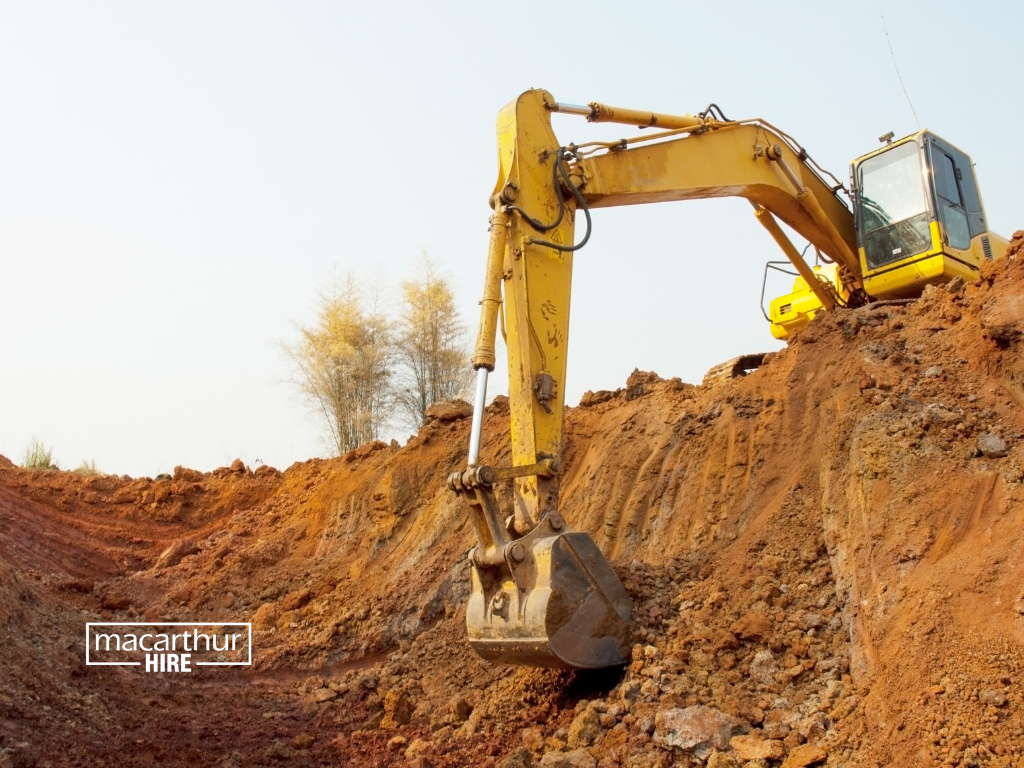
An auger is designed to drill a round hole and is often considered for fence posts, retaining-wall posts, signs, planting and some footing work. The required hole diameter and depth should be established before choosing the auger.
The correct diameter depends on the post or footing design, not simply the object being placed in the hole. There may need to be enough space for concrete, positioning and any specified cover around the post. Structural or regulated work should follow the approved design rather than general online guidance.
Depth is affected by the auger length, excavator reach and ground conditions. If deep holes are required, ask whether compatible extensions are available and suitable for the machine. Do not assume that an extension can be added to every auger arrangement.
Hole spacing should be marked and checked before drilling begins. On a fence line, a small positioning error can accumulate across multiple posts. Access must also allow the excavator to approach each hole without working too close to an edge, structure or overhead hazard.
When comparing an auger with manual digging, consider the number of holes and the ground. An auger may be practical for repeated holes in workable soil, while a small number of shallow holes might not justify excavator delivery and setup. The right choice depends on the entire project rather than drilling speed alone.
Augers do not perform equally in every soil. Ordinary earth, heavy clay, loose sand, roots and rock each create different challenges. The auger flight, teeth, drive unit and excavator must be suited to the expected conditions.
Compacted fill or clay may require an attachment designed for harder ground. Tree roots can obstruct progress and create unpredictable movement. Rock may call for specialist teeth, per-breaking or a different drilling method altogether.
If you do not know what lies below the surface, describe any visible rock, previous excavation, nearby retaining walls and local ground conditions to the hire provider. It may also be useful to ask the builder, property owner or contractor whether earlier work revealed fill, sandstone or buried obstructions.
Macarthur Hire lists auger attachments as an extra-cost option with its Kubota U17-3 mini excavator. Customers should confirm the available auger sizes, current availability and suitability for their ground before booking.
An auger should not be forced beyond the attachment or machine limits. If drilling stops unexpectedly, the operator should follow the manufacturer’s instructions and seek appropriate advice rather than improvising a method that could damage the equipment or create a safety risk.
A ripper uses a narrow, strong point to concentrate the excavator’s force into a small area. It can be useful for loosening compacted soil, hard clay, roots and some softer rock before the material is removed with a bucket.
Because a ripper loosens rather than carries material, it usually forms part of a two-stage process. The ground is broken first, and then a bucket is fitted to excavate or load the loosened material.
A ripper may be useful when a standard bucket skims across a hard surface instead of penetrating it. However, it is not a substitute for a hydraulic breaker when the site contains hard rock or substantial concrete.
Buried material requires caution. A ripper can catch roots, old foundations, pipes or other obstructions that were not visible at the surface. Service locating and site investigation should be completed before work begins.
Macarthur Hire states that a ripper is included with the three-bucket package for its Kubota U17-3. This is a useful inclusion for customers who expect changing ground conditions, but the attachment’s suitability should still be confirmed for the specific material and task.
A hydraulic breaker delivers repeated impact to break rock, concrete or other hard material. It may be considered for small demolition work, removing concrete paths or breaking material that a bucket and ripper cannot excavate effectively.
The breaker must match the excavator’s weight, hydraulic flow and pressure. An attachment that is too large or unsuitable for the hydraulic system can damage the machine or operate poorly.
Before hiring a breaker, identify the material and its approximate thickness. Reinforced concrete presents different challenges from reinforced paths or natural rock. Steel reinforcement may require separate cutting and handling after the concrete has been broken.
Noise, dust, flying fragments and vibration also need to be managed. Work near homes, roads, utilities or occupied buildings may be subject to local restrictions and additional controls. The customer should check relevant council requirements, site rules and work health and safety obligations.
Not every equipment-hire company stocks breakers for every excavator. Confirm availability rather than assuming it is part of a standard excavator package. If the supplier does not provide a suitable breaker, ask whether another machine or specialist service is more appropriate.
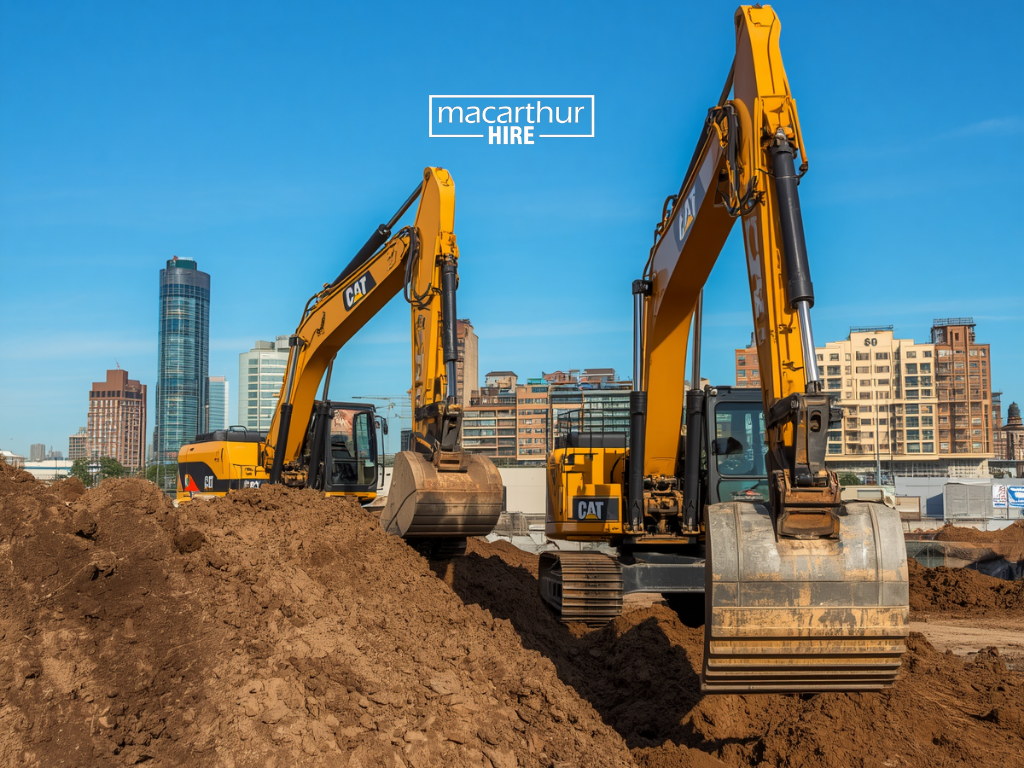
Grading work can include leveling soil, spreading fill, shaping a batter, cleaning a trench or preparing a base for later compaction. A wide, smooth-edged bucket is commonly used for these tasks.
The desired result should be explained clearly. Rough site leveling does not require the same control as preparing drainage falls or a base for paving. For work governed by plans or levels, the operator needs an appropriate method for checking height and slope.
Ground moisture affects the finish. Soil that is too wet can smear, rut or compact unevenly, while very dry or rocky material may not spread smoothly. Postponing work or preparing the material differently may produce a better outcome than trying to compensate with a larger attachment.
A grading bucket does not replace a compactor. After shaping, the area may require suitable compaction equipment and testing, depending on the project. If both grading and compaction are needed, plan the equipment rental period so the work can proceed in the correct order.
Customers working around Macarthur, Campbell, Camden, Narellan, Minto or Ingleburn should also consider local access and changing weather conditions. Delivery may be possible, but a wet or restricted site can still prevent safe unloading or operation.
Grapples and grabs are designed to hold irregular objects rather than scoop loose soil. Depending on the attachment, they may be used for logs, branches, green waste, rocks or selected demolition material.
The object’s weight, shape and center of gravity matter. Long or uneven loads can affect excavator stability even when their total weight appears manageable. The machine’s lifting chart and manufacturer instructions must be followed.
Different grapples are intended for different materials. A log grapple, sorting grab and demolition grapple are not interchangeable simply because each can close around an object.
Availability varies considerably between business equipment rent. If material handling is an important part of the project, ask the provider whether a compatible grapple is available for the selected excavator. If it is not, another machine such as a loader may be more suitable.
Other specialist attachments may include compaction wheels, hydraulic thumbs or screening buckets, but they should not be assumed to be part of a general hire fleet. The most reliable approach is to explain the material and required outcome, then ask which available equipment is designed for the task.
An attachment should be selected together with the excavator, not as a separate decision. Compatibility involves more than whether the pins or coupler appear to fit.
The excavator must have sufficient operating capacity for the attachment and the expected load. Hydraulic attachments must match the machine’s flow, pressure and connection requirements. The quick hitch or coupler must also be compatible and used in accordance with the manufacturer’s instructions.
SafeWork NSW guidance emphasizes compatibility between the quick hitch, attachment and host machine, along with correct engagement of retention and safety systems. Customers should use only approved combinations supplied or confirmed by the hire provider.
Machine size also influences access, reach and productivity. A compact excavator may suit a residential side passage but lack the capacity for a large breaker or deep excavation. A larger machine may complete heavy work more efficiently but be unable to enter the site.
Macarthur Hire currently lists compact excavators in its earth moving equipment range, including the 1.7-tonne Kubota U17-3 and compact Takeuchi TB210R. Availability and inclusions can change, so customers should check the product information and confirm the booking directly.
When you rent equipment, compare what is included rather than looking only at the advertised daily rate. The excavator, buckets, ripper, auger, trailer, delivery, fuel, cleaning and other attachments may be priced or supplied differently.
Check whether the rate covers a day, weekend or full week and when the equipment must be returned. If the project may run longer, ask about extension arrangements before the original period ends.
Transport is another important cost. Macarthur Hire’s Kubota listing states that delivery is available at an additional charge and identifies towing requirements for customers collecting the machine. Anyone planning to tow hired equipment should confirm the combined weight, trailer details, tow-vehicle rating, license requirements and applicable road rules.
Review the hire terms for identification, payment, deposits, damage, fuel, cleaning, breakdowns and prohibited uses. Business equipment rental customers should also confirm their workplace responsibilities and whether the proposed operator is competent for the machine and task.
For business equipment hire, service can be as important as price. Clear product information, operating manuals, a contact process and help identifying compatible attachments can reduce uncertainty before the equipment reaches the worksite.
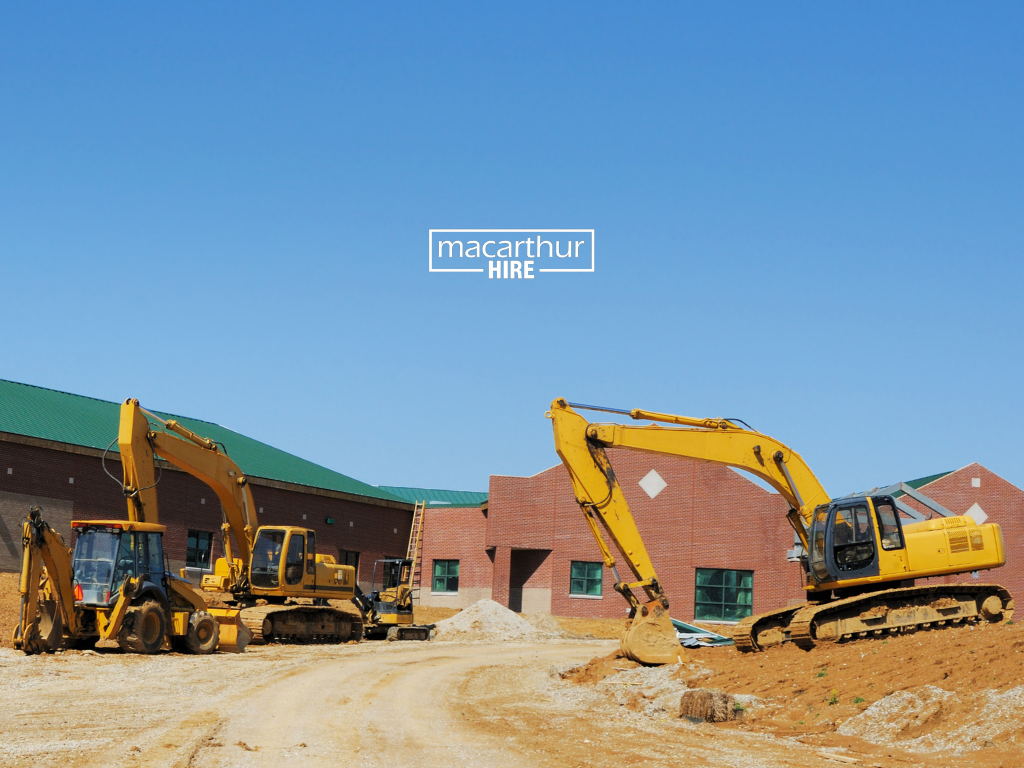
Contact the hire company before booking if you are uncertain about the attachment, machine size, access or ground conditions. A short discussion can be more useful than reserving equipment based on a photograph.
Macarthur Hire is a relevant contact for customers comparing equipment for rent around the Macarthur and south-west Sydney areas. Its published range includes compact excavators, buckets, a ripper and optional auger attachments, but customers should confirm current stock and exact compatibility for their preferred dates.
Ask for guidance when the job includes hard ground, rock, roots, steep terrain, restricted access or work near structures. The hire company may need measurements, photographs or further details before suggesting an available option.
You should also make contact when the attachment may require hydraulic connections or a specific quick hitch. Do not fit an unapproved attachment to hired equipment or modify the machine to make another attachment work.
If the job is beyond the customer’s experience or involves significant hazards, a dry equipment rental may not be the right solution. Discuss whether an appropriately qualified or experienced contractor is required.
Start by explaining the job. State whether you are digging, trenching, drilling, ripping, breaking, grading or handling material. Include the approximate dimensions, such as trench width and depth, hole diameter, number of holes or area to be leveled.
Describe the ground as accurately as possible. Mention clay, compacted fill, roots, visible rock, concrete, recent rain, slopes and any known underground structures.
Provide access measurements and note gates, steps, retaining walls, narrow driveways, soft lawns, overhead power lines and space for unloading. Photographs can help explain conditions, but they should accompany measurements rather than replace them.
Give the site address, preferred hire dates and expected duration. Explain whether you intend to collect the equipment or require delivery. If collecting, provide information about the tow vehicle so the hire company can confirm whether the arrangement is appropriate.
For business equipment rentals, include the company contact, site contact and any timing or access rules that may affect delivery. Ask for a written quote that identifies the machine, attachments, hire period, delivery, collection and other charges.
To discuss a specific project, customers can contact Macarthur Hire with the job details and site conditions. The company can then confirm whether suitable equipment and attachments are available rather than leaving the customer to make assumptions.
The best excavator attachment is the one that matches the work, the ground and the approved machine. Define the required result, measure the site and discuss uncertain conditions before booking. This creates a clearer equipment rental request and reduces the likelihood of the wrong attachment arriving for the job.