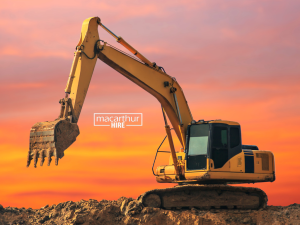



Construction equipment for rental offers Australian builders, contractors and property owners a practical way to access machinery without purchasing equipment for every project. On smaller building sites, choosing the right machinery is particularly important because limited space, restricted access and changing project requirements can affect how efficiently work is completed.
Residential construction, renovation projects, landscaping and smaller excavation works often require different equipment from large commercial developments. A machine that performs well on an open construction site may be difficult to manoeuvre between existing buildings, fences or narrow driveways.
Hiring equipment allows businesses to select machinery according to the work being undertaken. However, successful equipment hire requires more than choosing a machine based on its size or general purpose.
Before booking, it is important to understand the project requirements, site conditions, equipment specifications and rental arrangements. These considerations can help businesses avoid unsuitable machinery, unnecessary costs and disruptions to their construction schedule.
Smaller construction projects do not always require machinery throughout the entire job.
An excavator may be needed during early site preparation, while other equipment may only be required for landscaping, cleaning or final property maintenance.
Construction equipment rental allows businesses to arrange machinery for the stages when it is needed rather than investing in equipment that may remain unused between projects.
Owning machinery also involves ongoing responsibilities such as servicing, repairs, storage and transport. For contractors working across different properties, these requirements can become difficult to manage.
Hiring may be especially practical when the equipment is required occasionally or when project conditions vary significantly.
For example, a contractor working on residential drainage may need a compact excavator for one property and a different machine for another site with greater excavation requirements.
Equipment rental offers flexibility, although the overall cost should still be compared with purchasing when machinery is used regularly.
The most suitable arrangement depends on how often the equipment is required, the duration of each project and the resources available for operating and maintaining it.
Small building sites can present operational challenges that are less noticeable on larger construction projects.
Restricted access is one of the most common considerations. Residential properties may have narrow gates, limited driveway width or existing structures that affect how machinery enters the site.
Available working space is another factor. An excavator needs sufficient room to position itself, move its attachment and place excavated material without creating hazards around nearby structures.
Ground conditions can also influence machinery selection.
Soft soil, sloping surfaces, uneven ground and wet conditions may affect stability and the equipment’s ability to operate safely.
Other challenges include neighbouring properties, overhead services, underground utilities and limited space for deliveries.
These factors should be assessed before choosing machinery.
A smaller machine is not automatically the safest or most effective option. It must still have sufficient capacity for the intended task and be suitable for the conditions in which it will operate.
Selecting suitable construction equipment rental starts with understanding the space available and the work that needs to be completed.
Machine dimensions, operating weight and working capabilities should be considered together.
A machine may be able to enter a site but still lack the space or capacity required to perform the job effectively.
Restricted access requires careful planning before equipment arrives.
Builders and contractors should measure the narrowest points along the access route, including gates, driveways and areas between existing structures.
It is also important to consider height restrictions created by garages, carports, trees or overhead installations.
Machine width alone does not determine whether access is suitable.
Attachments, tracks, protective structures and other components can influence the clearance required.
The available working area should also be assessed.
For example, an excavator may fit through a side entrance but require additional space to rotate and position its bucket safely.
Businesses should provide accurate site measurements to the hire supplier rather than estimating whether equipment will fit.
Photographs and a description of the access route may also help explain the site conditions.
If access remains uncertain, the suitability of the proposed equipment should be confirmed before delivery arrangements are finalized.
Choosing the right machine involves balancing physical dimensions with working capacity.
For excavation projects, important considerations include digging depth, reach, bucket size, operating weight and the volume of material being moved.
A smaller excavator may offer better maneuverability in a confined space, but it may not have the reach or digging capacity required for the project.
Larger equipment can offer additional capability, although it may require more operating space and suitable ground conditions.
For example, trenching beside an existing building may require a different machine configuration from clearing soil across an open residential block.
Attachments can also affect suitability.
A bucket appropriate for general excavation may not be the best option for a narrow drainage trench or specialised material handling.
Before selecting equipment, businesses should define the work to be completed and confirm the specifications required.
This helps ensure that the chosen machinery is appropriate for the actual task rather than simply being the smallest or largest available option.
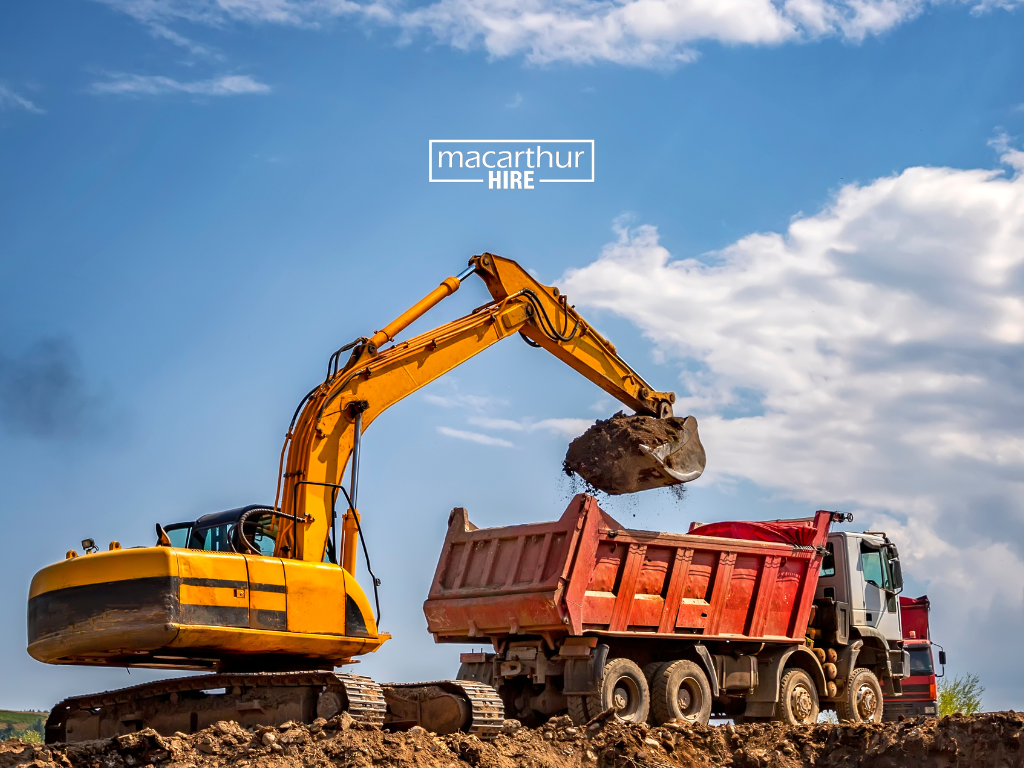
Excavators are commonly used for trenching, ground preparation, landscaping and earthmoving work.
For smaller sites, construction equipment rental can provide access to different excavator sizes without requiring businesses to own several machines.
However, the appropriate excavator depends on access conditions, digging requirements and the experience of the person operating it.
Excavator hire can be useful for residential construction, drainage installation, landscaping preparation and other projects requiring controlled excavation.
Across the Macarthur region, building sites can vary from established residential properties with limited access to larger blocks with more available working space.
For customers researching excavator hire Macarthur, it is important to consider the specific site rather than selecting machinery solely because it is described as compact.
For example, a project involving a narrow trench may require sufficient digging depth and a suitable bucket configuration.
A landscaping project may have different requirements involving soil removal, grading or preparation for retaining structures.
Ground conditions should also be reviewed before excavation begins.
Contractors need to assess the stability of the surface, the location of nearby structures and the possible presence of underground services.
The operator must have the appropriate competency, training and supervision for the machinery and work being performed.
A local hire provider can help clarify machine specifications and availability, but responsibility for safe site planning and operation must also be addressed.
A Kubota excavator may be appropriate for certain residential and small construction projects, depending on the model and its capabilities.
Kubota manufactures excavators in different sizes, so the brand name alone does not establish whether a particular machine is suitable for restricted access.
For example, Macarthur Hire lists the Kubota U55-4 excavator within its published equipment range.
Before selecting this or another excavator, customers should review its actual dimensions, operating weight, digging depth, reach and attachment requirements.
The working area must also accommodate the machine’s movement and the safe handling of excavated material.
A larger excavator may suit a project with substantial digging requirements and sufficient working space, while a smaller machine may be more appropriate for limited access.
Hire availability and specific machine configurations should be confirmed directly with the supplier.
When comparing excavators, the objective is to select equipment that can complete the required work safely and effectively within the available site conditions.
Construction equipment rental is not limited to excavators and earthmoving machinery.
Small building projects may also require tools for preparing outdoor areas, maintaining access, cleaning surfaces and completing landscaping tasks.
The equipment needed often changes as the project progresses.
Different stages of a building project can require different types of equipment.
For example, early site preparation may involve excavation and ground work, while later stages may require landscaping equipment or tools for general property maintenance.
Cultivators and tillers can be useful for suitable soil preparation tasks, particularly where garden beds or landscaped areas need attention.
Other equipment may be required for lifting, moving materials or supporting temporary site operations.
Macarthur Hire’s published range includes earthmoving equipment, a cultivator or tiller, a sandstone block lifter and site sheds.
However, equipment should be selected according to its intended use and the conditions of the project.
A machine designed for landscaping may not be suitable for excavation work, and equipment intended for material handling must not be used beyond its rated capabilities.
Choosing equipment for each stage of the project helps businesses avoid paying for machinery that does not meet their actual requirements.
Not every task on a small building site requires heavy machinery.
Lawn mower hire may be useful for property maintenance, vegetation management and suitable landscaping work.
For example, a property owner preparing an outdoor area for landscaping may need mowing equipment before other work begins.
A ride-on mower can be useful for certain larger grassed areas, provided the terrain and operating conditions are suitable.
Macarthur Hire lists a Husqvarna TS 142 TXD within its equipment range. Customers should confirm its suitability for the proposed work before booking.
A petrol pressure washer may also be useful for appropriate outdoor cleaning tasks, such as cleaning certain hard surfaces or equipment.
However, pressure washing is not suitable for every surface.
High-pressure water can damage coatings, timber, joints and some building materials. It can also create injury risks if equipment is operated incorrectly.
Before using a pressure washer, the operator should follow the manufacturer’s instructions and consider drainage, electrical hazards and the suitability of the surface.
Availability of a particular cleaning machine should be confirmed with the hire provider.
These smaller tools can support site preparation and maintenance without requiring machinery intended for more demanding construction activities.
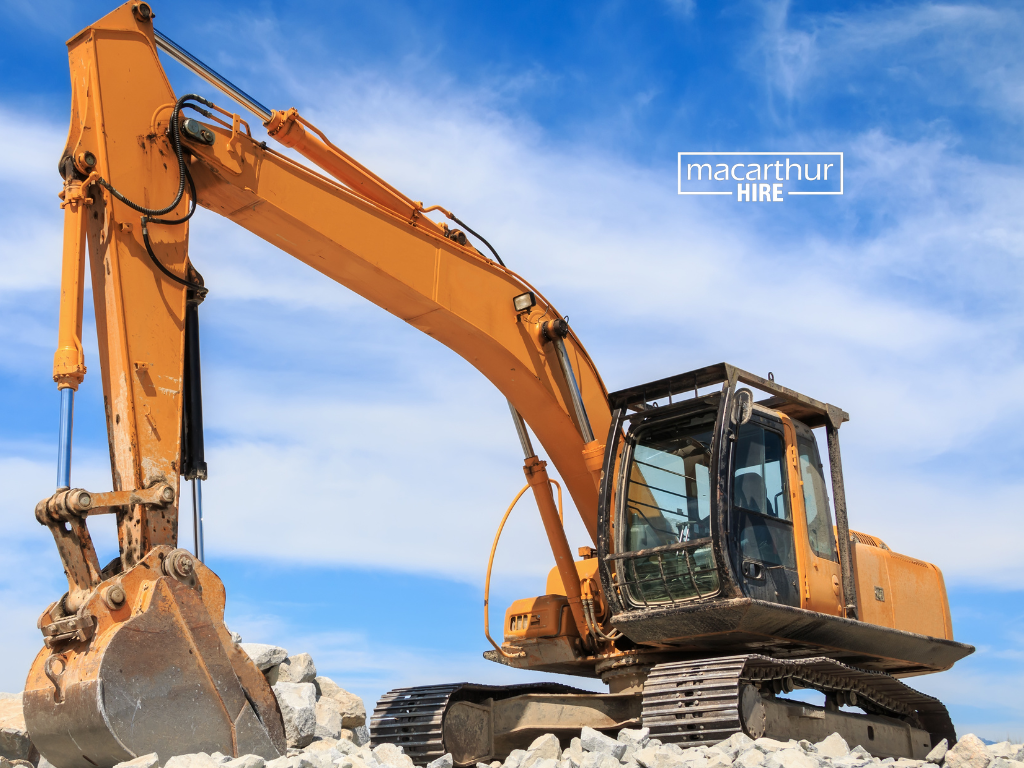
The total cost of construction equipment rental depends on more than the advertised hire rate.
Equipment type, hire duration, transport arrangements and additional conditions can influence the amount a customer pays.
Understanding these factors before booking helps builders and contractors prepare more realistic project budgets.
Machine size and type are important factors influencing rental costs.
An excavator generally involves different operating and transport considerations from a lawn mower, cultivator or portable cleaning tool.
Hire duration also affects pricing.
Suppliers may offer different rates for daily, weekly or longer rental periods, depending on the equipment and their terms.
Additional costs may relate to delivery, collection, attachments, fuel, cleaning, damage responsibility or use beyond agreed limits.
For example, a customer hiring an excavator should establish whether the quotation includes transport to the site and whether additional buckets or attachments attract separate charges.
Businesses should also confirm whether the equipment must be returned with a specified fuel level.
Damage waivers or other risk-related charges should be understood before accepting the hire agreement. These arrangements are not necessarily equivalent to comprehensive insurance.
For Australian customers, it is useful to confirm whether quoted prices include GST and whether deposits or other charges apply.
A detailed quotation allows businesses to compare the total hire arrangement rather than focusing only on the initial daily rate.
The most appropriate hire period depends on the project schedule and how frequently the machinery will be used.
Daily hire may suit a clearly defined task that can be completed within a short period.
Weekly hire may be more practical when work is expected to continue over several days or when the equipment will be required at different stages.
However, customers should compare the actual costs rather than assume a longer hire period automatically provides better value.
Construction delays, weather conditions and the availability of operators can affect how long equipment is needed.
For example, an excavator booked for drainage work may remain unused if excavation cannot begin because the site is not ready.
Planning the hire around confirmed project activities can help reduce unnecessary rental time.
Businesses should also understand how hire extensions are arranged and what happens if the equipment cannot be returned at the agreed time.
Before booking, confirm the rental start and end times, operating allowances, return conditions and any charges that may apply if the hire period changes.
Safety is a key consideration when arranging construction equipment rental, particularly where machinery operates close to buildings, workers, pedestrians or neighbouring properties.
Smaller sites can have limited room for equipment movement, making careful planning essential.
Selecting a suitable machine does not remove the need for proper hazard identification, operator competency and safe working procedures.
Before operating machinery, the person responsible for the work should assess the site and identify relevant hazards.
For excavation projects, underground services are an important consideration.
SafeWork NSW advises that current essential services information must be obtained before excavation work begins.
Before You Dig Australia can assist with identifying underground infrastructure, but plans alone may not establish the exact position or depth of every service. Further locating and verification may be required before work proceeds.
Overhead power lines, unstable ground, nearby structures and pedestrian movement also require attention.
Equipment should be inspected in accordance with the manufacturer’s requirements and the hire agreement before use.
Operators should be familiar with the machine’s controls, limitations and emergency procedures.
Where excavation or mobile plant activities meet the definition of high-risk construction work, a suitable Safe Work Method Statement must be prepared before that work begins.
The required safety measures depend on the actual activity and site conditions.
Businesses should follow applicable workplace health and safety requirements and seek competent advice where necessary.
Site preparation should begin before hired machinery arrives.
The delivery route needs to accommodate the transport vehicle as well as the equipment being supplied.
A narrow residential street, steep driveway or restricted unloading area may affect delivery arrangements.
Customers should discuss these conditions with the hire supplier in advance.
The site should also provide a suitable area for unloading and positioning machinery.
Other trades, pedestrians and vehicles may need to be kept clear of equipment movement areas through appropriate traffic management and separation controls.
Ground conditions should be reviewed to determine whether the surface can safely support the machinery and any delivery vehicle involved.
For excavation work, sufficient space is required for the machine, spoil placement and safe separation from trench edges.
Weather conditions may also affect site readiness.
Heavy rain can change ground stability and make previously accessible areas unsuitable for equipment movement.
Confirming these details before delivery helps reduce avoidable disruptions and supports safer use of machinery on smaller sites.
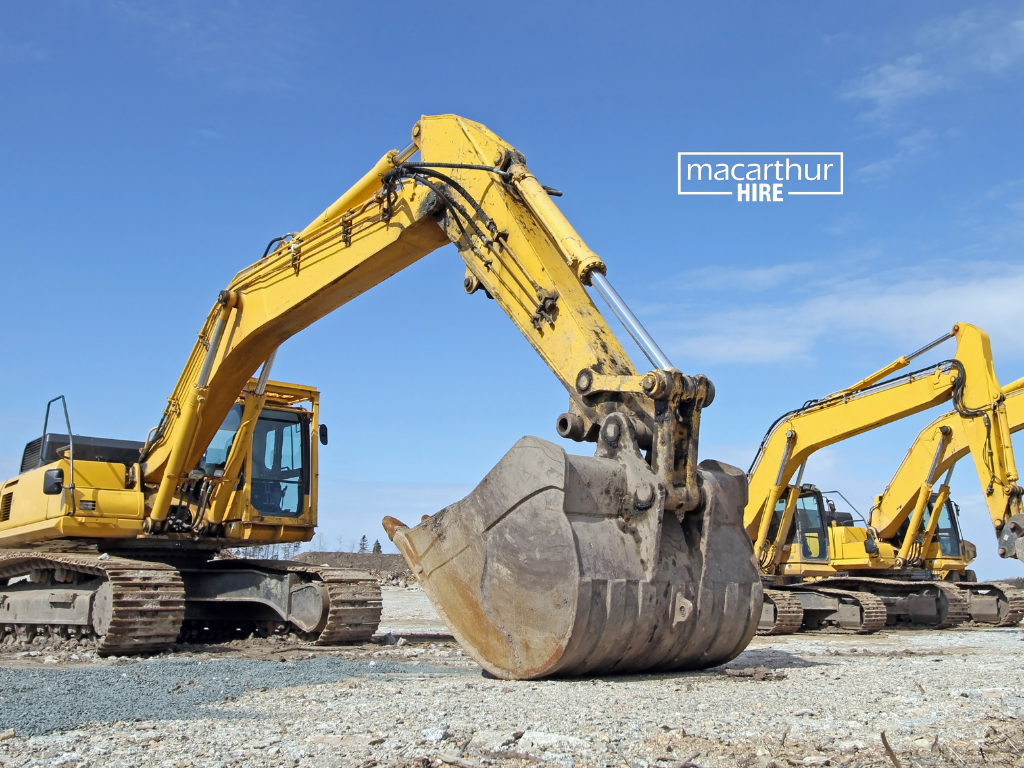
Choosing a construction equipment rental provider involves assessing more than equipment availability.
Businesses should also consider the suitability of the machinery, hire conditions, delivery arrangements and the information provided before booking.
A suitable supplier should be able to explain the equipment specifications and clarify the rental terms relevant to the proposed work.
Before arranging equipment hire, customers should confirm that the proposed machine can perform the intended task.
For excavators, this means reviewing dimensions, operating weight, digging depth, reach and available attachments.
Customers should also establish whether the machinery can be transported to and safely accessed on the site.
Hire conditions are equally important.
The booking should clearly identify the hire period, rental charges, delivery arrangements, fuel requirements and responsibilities for damage or late returns.
If the project requires a particular attachment, customers should confirm its compatibility and availability.
Operator requirements must also be considered.
Dry hire generally involves hiring machinery without an operator, meaning the customer must arrange someone competent to operate it safely.
Where a provider offers wet hire, the arrangements and responsibilities should be confirmed separately.
Businesses should not assume that every hire supplier offers both options.
Providing accurate project details helps the supplier understand what equipment is required and whether the proposed hire arrangement is suitable.
Local equipment hire providers can be useful for projects requiring machinery delivery, collection or discussions about site requirements.
For businesses and property owners around Campbelltown, Camden, Narellan, Minto and surrounding Macarthur areas, it is practical to compare the available equipment and confirm delivery arrangements before booking.
Macarthur Hire provides equipment rental services and lists machinery such as the Kubota U55-4 excavator, Takeuchi TB210R, Husqvarna TS 142 TXD and cultivator or tiller within its published range.
Customers should confirm current availability, machine specifications, hire periods and delivery conditions directly with the business.
The appropriate equipment will depend on the type of work, access limitations and operating requirements.
For smaller projects, taking time to explain the work involved can help identify whether an excavator, landscaping machine or another tool is the appropriate choice.
If you are planning excavation, residential construction, landscaping or site preparation, explore the equipment available through Macarthur Hire and discuss your requirements before booking.
The right construction equipment rental arrangement should provide machinery that suits the job, fits the site and can be operated safely under the agreed conditions.
By reviewing equipment specifications, site access, rental costs and safety requirements in advance, Australian builders and contractors can make informed hiring decisions and plan their smaller projects more effectively.