

Choosing between buying construction machinery and using construction equipment rental services can significantly affect your project budget. Whether you are a builder, contractor, landscaper or property owner, understanding the true costs of equipment hire versus ownership can help you make a more practical financial decision.
Purchasing equipment provides long-term access to machinery, but it also involves upfront spending, maintenance, insurance, storage and depreciation. Renting gives you access to equipment for specific projects without committing to ownership, although repeated hire fees can become expensive over time.
For Australian construction businesses, the right choice depends on project duration, equipment usage, available capital and the type of work involved.
This guide explains how to compare rental costs with ownership expenses, when hiring may be more economical and what to consider before choosing equipment for your next project.
Construction equipment rental can be more economical than purchasing machinery when equipment is only required occasionally or for a limited project.
Instead of paying the full purchase price, customers pay to use a machine for an agreed period. This allows businesses to access equipment without taking on the long-term financial responsibilities associated with ownership.
For example, a contractor who needs an excavator for a short landscaping project may prefer hiring rather than purchasing a machine that could remain unused afterwards.
Buying can make more financial sense when the equipment is required regularly, particularly when a business has consistent work that justifies the investment.
However, the purchase price should not be the only factor in the decision.
Owners must also consider servicing, repairs, insurance, transport, storage and the machine’s eventual resale value.
The most economical option depends on how often the equipment will be used and how much it costs to keep it operational.
Equipment Hire offers flexibility for contractors managing changing workloads and different project requirements.
A construction business may need an excavator for one project, a compactor for another and access equipment for occasional maintenance work.
Buying every machine could involve substantial capital expenditure, particularly when some equipment is rarely used.
Hiring allows businesses to select machinery according to individual project requirements rather than relying entirely on equipment they already own.
It may also help preserve cash for wages, materials, subcontractors and other operating expenses.
However, businesses with steady workloads may prefer ownership because they can access their machinery without arranging a separate hire.
The decision should reflect the company’s financial position, project schedule and expected equipment utilisation.
When comparing construction equipment rental options, customers should look beyond the advertised hire rate.
Rental charges may be calculated daily, weekly, over a weekend or according to another agreed period.
The total cost can also depend on equipment delivery, collection, fuel, cleaning, attachments and damage liability arrangements.
Some suppliers require deposits or other security arrangements, depending on the machinery and rental conditions.
For example, a customer hiring an excavator may need additional buckets or a ripper attachment. Whether these are included in the quotation depends on the supplier and equipment package.
Customers should also confirm when the hire period starts and ends.
Returning machinery late or extending a booking may result in additional charges.
Before committing to equipment rental, request a quotation that clearly explains the hire duration, included items, transport arrangements and relevant conditions.
Buying construction equipment generally requires a larger initial financial commitment.
Businesses may purchase machinery outright or use finance arrangements to spread payments over time.
However, financing can introduce interest charges, establishment fees and ongoing repayment obligations.
Purchasing also involves considerations such as insurance, registration where applicable, equipment accessories and suitable transport arrangements.
The initial purchase price may not reflect the total amount required to make a machine ready for work.
For smaller contractors, committing significant capital to machinery can reduce the funds available for other business activities.
Ownership may still provide value when a machine is essential to everyday operations.
The important consideration is whether the expected long-term benefits justify both the purchase and continuing expenses.
One reason businesses consider construction equipment rental is to avoid taking responsibility for the routine servicing and long-term upkeep of machinery they own.
Construction equipment requires maintenance to remain safe and operational.
Depending on the machine, this may involve fluid changes, filter replacements, inspections, lubrication, hydraulic maintenance and replacement of worn components.
Unexpected breakdowns can also affect project schedules.
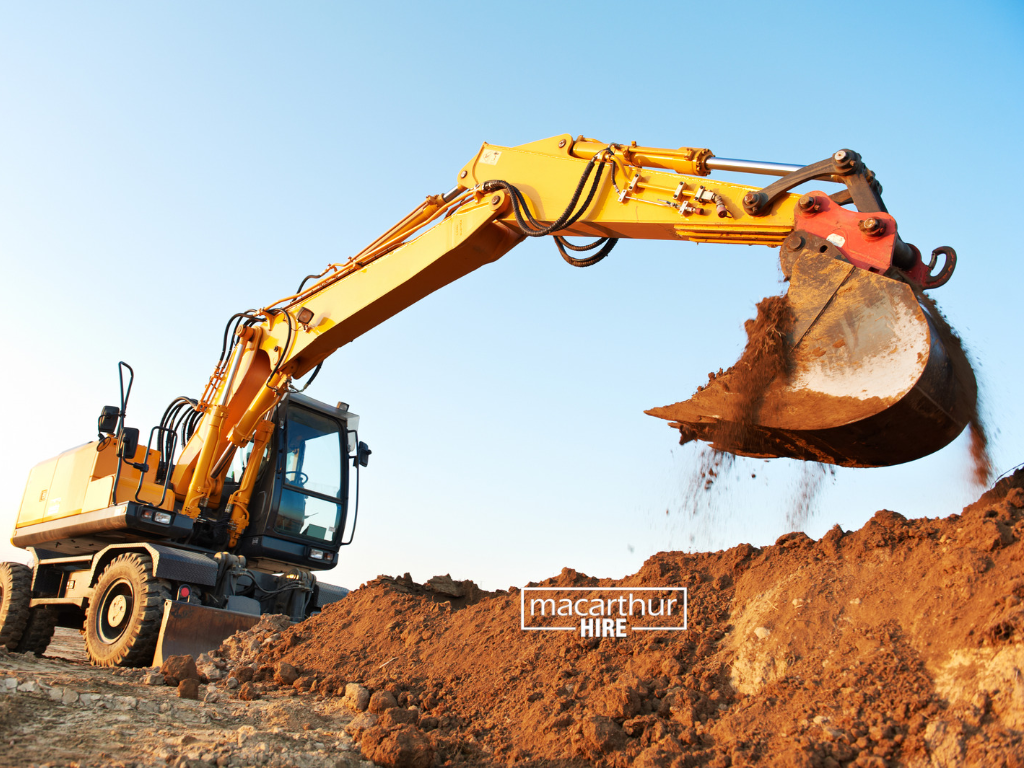
For example, an excavator requiring major repairs may be unavailable while replacement parts are sourced and maintenance work is completed.
Owners generally need to organise and fund these repairs, subject to warranty or insurance arrangements.
With hired equipment, routine maintenance is generally managed by the rental provider, although the customer still has responsibilities under the hire agreement.
Customers may remain responsible for damage, misuse, cleaning or other specified conditions.
Before hiring, it is important to understand who handles mechanical faults and what support is available if the equipment stops working.
Owning construction machinery involves costs even when it is not being used.
Equipment may require secure storage to reduce the risk of theft, weather damage or unauthorised use.
Larger machines may need dedicated storage areas or suitable facilities.
Transport is another consideration.
Moving an excavator between worksites may require a trailer, tilt tray or other suitable transport arrangement.
Owners must also account for appropriate insurance and any applicable registration or compliance requirements.
Depreciation affects the financial value of purchased equipment.
As machinery ages and accumulates operating hours, its resale value may decline.
Although an owner may recover part of the investment by selling the machine, the amount received will depend on its condition, age and market demand.
These expenses should be included when calculating the long-term cost of ownership.
Construction equipment rental can be particularly suitable for work that requires specialised machinery for a limited period.
Examples include residential excavation, drainage installation, landscaping, site preparation and property renovations.
A contractor may require an excavator for several days but have no immediate need for it once the project is completed.
In this situation, hiring avoids purchasing equipment that may sit unused between jobs.
Equipment rental can also help businesses respond to temporary increases in workload.
For example, a landscaping company may need additional machinery during a busy period without wanting to permanently expand its equipment fleet.
Customers can choose equipment based on the individual project, subject to availability.
However, accurate scheduling is important.
If a project is delayed, additional hire days can increase costs.
Planning equipment delivery and use around the actual work schedule can help reduce unnecessary rental expenses.
Buying may become more economical when a business uses the same machine regularly throughout the year.
For example, a contractor completing excavation work on most working days may benefit from owning a suitable excavator.
Regular use allows the purchase cost to be spread across more productive operating hours.
Ownership also provides greater control over machine availability, maintenance scheduling and certain equipment modifications.
However, frequent use does not automatically make purchasing the better option.
The business must still consider finance expenses, servicing, depreciation, transport and potential breakdowns.
A useful measure is equipment utilisation, which compares actual productive use with the time the machine is available.
A machine used for only a small portion of the year may be expensive to own relative to the work it performs.
Businesses should review previous projects and realistic future workloads before deciding whether to purchase equipment.
A practical way to compare hiring and purchasing is to calculate the expected total cost over the same period.
For construction equipment rental, this means estimating how many days or weeks the machinery will be required and adding relevant charges.
Consider a hypothetical contractor who needs an excavator for several projects throughout the year.
If the equipment is hired for 20 days at an illustrative rate of $300 per day, the base rental expense would be $6,000.
The calculation is:
20 hire days × $300 = $6,000
This example is hypothetical and does not represent a verified rental rate from Macarthur Hire or another supplier.
Delivery, collection, attachments, fuel and other applicable charges would need to be added.
If the business expects to use the machine more frequently, it should compare daily hire with available weekly or longer-term arrangements.
The most suitable option depends on the actual working schedule and rental conditions.
Buying equipment requires a different calculation because the machine retains some resale value.
A simplified ownership cost comparison can be expressed as:
Total Ownership Cost = Purchase Price − Estimated Resale Value + Operating and Ownership Expenses
Operating and ownership expenses may include finance costs, insurance, maintenance, repairs, storage and transport.
For example, consider a hypothetical machine purchased for $40,000 and later sold for $25,000.
The difference between purchase price and resale value is $15,000.
If the business also incurs $8,000 in ownership expenses over the same period, the estimated total cost is $23,000.
These figures are illustrative rather than actual equipment prices.
The business can compare that amount with the total cost of renting equivalent machinery over the same period.
The break-even point occurs when the expected cost of continued hiring becomes comparable to the cost of ownership.
However, the comparison should account for real operating hours, equipment availability, downtime and changing project requirements.
Tax treatment may also affect the financial outcome, so businesses should seek advice from a qualified accountant when making a substantial purchase.
Selecting suitable machinery is just as important as deciding whether to hire or buy.
Construction equipment rental should begin with identifying the work that needs to be completed.
Excavators may be appropriate for trenching, digging and earthmoving. Compactors can be used for preparing suitable ground surfaces, while access equipment may be needed for certain elevated tasks.
Customers comparing equipment for rent should consider capacity, dimensions, operating requirements and site conditions.
For example, a large excavator may offer greater digging capacity but may not fit through narrow residential access points.
A smaller excavator may be easier to position but could take longer to complete substantial earthmoving work.
Ground conditions also matter.
Uneven surfaces, soft soil, slopes and nearby structures can influence equipment suitability and safe operation.
Choosing machinery that matches the worksite helps reduce unnecessary expenses and operational problems.
Before booking, customers should confirm that an appropriately trained and competent person will operate the equipment and that the required safety arrangements are in place.
For customers comparing excavator hire Macarthur options, machine specifications should guide the decision.
A Kubota excavator may be suitable for particular excavation, trenching or landscaping applications, depending on the model and site conditions.
However, the brand alone does not determine whether a machine is appropriate.
Customers should compare digging depth, reach, operating weight, machine width and attachment compatibility.
For example, an excavator used to prepare a residential drainage trench may have different requirements from machinery needed for larger earthmoving work.
Customers should also consider access gates, overhead clearance, underground services and ground stability.
Macarthur Hire lists several excavator options within its equipment range, including a Kubota U55-4 excavator.
The company also offers other categories of equipment for construction, landscaping and site-related work.
For customers working in Camden, Narellan, Leppington and surrounding areas, discussing the project requirements with a local equipment hire provider can help identify suitable options.
Current equipment availability, specifications, transport arrangements and hire conditions should always be confirmed before booking.
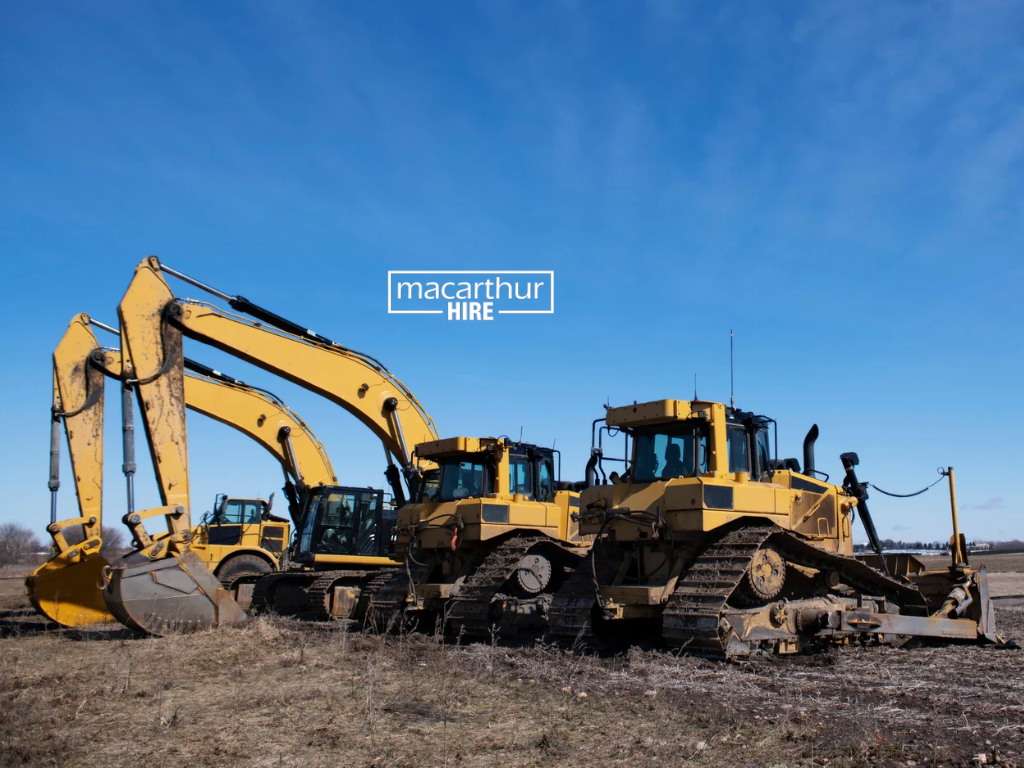
Before committing to construction equipment rental, customers should review the complete hire arrangement.
The first consideration is whether the equipment is suitable for the intended work.
Ask the supplier about machine specifications, attachments, operating requirements and any relevant site limitations.
It is also important to confirm the total hire cost.
Customers should understand whether delivery, collection, fuel, cleaning, damage liability and other services are included or charged separately.
Booking availability and extension arrangements should also be discussed.
For example, a construction project may be delayed by weather, site access issues or changes to the work schedule.
Understanding how additional hire periods are charged can help customers manage these situations.
Safety responsibilities are another important consideration.
Customers should confirm the requirements for competent operators, pre-use inspections, safe transport and appropriate working conditions.
A suitable equipment hire provider should be able to explain the relevant rental conditions and help customers understand the equipment being supplied.
The decision to hire or buy construction machinery should be based on long-term value rather than the advertised price alone.
Hiring may be more practical for occasional projects, temporary workloads or specialised equipment that is not required regularly.
Buying may be appropriate when machinery is used frequently, suitable storage is available and the expected workload supports ownership expenses.
Businesses should also consider whether future projects will require the same equipment.
For example, a contractor who regularly changes between excavation, landscaping and access work may benefit from renting different machines when needed.
A business consistently performing the same type of work may find ownership more suitable.
When evaluating options, consider total costs, equipment utilisation, project duration, cash flow and the practical responsibilities involved.
For contractors, landscapers and property owners in the Macarthur region, Macarthur Hire provides equipment rental options that can be considered when planning construction and site work.
Customers can discuss their equipment needs, confirm available machinery and review hire conditions before proceeding.
Ultimately, the most cost-effective approach depends on how often the machinery will be used, the work it needs to perform and the total expenses associated with each option.
A well-planned construction equipment rental decision can help Australian businesses manage project costs, access suitable machinery and avoid unnecessary commitments to equipment they may not use regularly.