
Choosing the right construction equipment rental can make a significant difference to how efficiently and safely a project is completed. Whether you are preparing a building site, excavating trenches, installing paving or completing landscaping work, the machinery you select should match the job, available space and site conditions.
With different excavators, loaders, compactors and access equipment available, it is not always easy to determine which machine is suitable. Hiring equipment that is too small may slow down progress, while oversized machinery can create access difficulties and unnecessary costs.
For builders, contractors, tradespeople and property owners across Australia, understanding equipment capabilities before booking helps avoid these problems.
This guide explains how to compare construction machinery, understand important specifications and choose suitable equipment hire options for your project.
Construction equipment rental gives businesses and individuals access to machinery without purchasing equipment that may only be needed for a particular project.
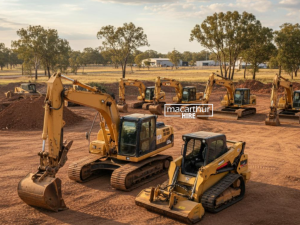
Different stages of construction require different machines. Excavators are commonly used for digging trenches and preparing foundations, while loaders help move soil, gravel and other loose materials.
Compaction equipment is used when preparing stable ground for paving, driveways and other surfaces. Access equipment can provide elevated working platforms for suitable maintenance and construction tasks.
For projects involving several stages, more than one type of equipment may be necessary.
For example, preparing a residential driveway might involve excavation, removing excess soil, placing road base and compacting the surface.
Understanding the complete sequence of work makes it easier to identify which machines are needed and when.
Before contacting an equipment rental provider, consider the specific tasks involved.
A small backyard landscaping project may require compact machinery that can pass through restricted access points. A larger construction site may need equipment with greater reach, lifting capacity or material-handling capabilities.
Project duration also matters. Some machinery may only be required for a day, while other equipment could be needed throughout several stages of construction.
When planning to rent equipment, consider the ground conditions, working area, access width and materials being moved.
These details help the hire provider recommend equipment suited to the actual job rather than relying on a general description of the project.
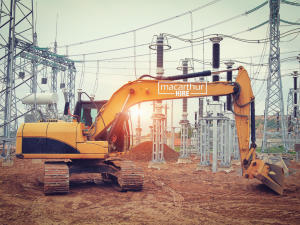
Excavators are commonly used for digging, trenching, landscaping, drainage and site preparation.
However, excavators vary considerably in size and operating capabilities.
Mini excavators can be suitable for certain residential projects, particularly when access is restricted. Larger machines may be more appropriate for extensive excavation or jobs requiring greater digging depth and reach.
When selecting an excavator through construction equipment rental, check its operating weight, overall width, digging depth and available attachments.
For example, a compact excavator may fit through a narrow access point but may not have the reach or capacity needed for deeper excavation.
The machine’s operating space is equally important. Sufficient clearance is required for safe movement and operation.
Before booking, explain the type of excavation, expected ground conditions and any access restrictions to the equipment hire provider.
Excavators, loaders and skid steers perform different tasks.
Excavators are primarily designed for digging and related earthmoving work. Their articulated boom and bucket allow operators to reach below ground level and remove material.
Wheel loaders are commonly used to collect, transport and load loose materials, such as soil or gravel, within suitable working areas.
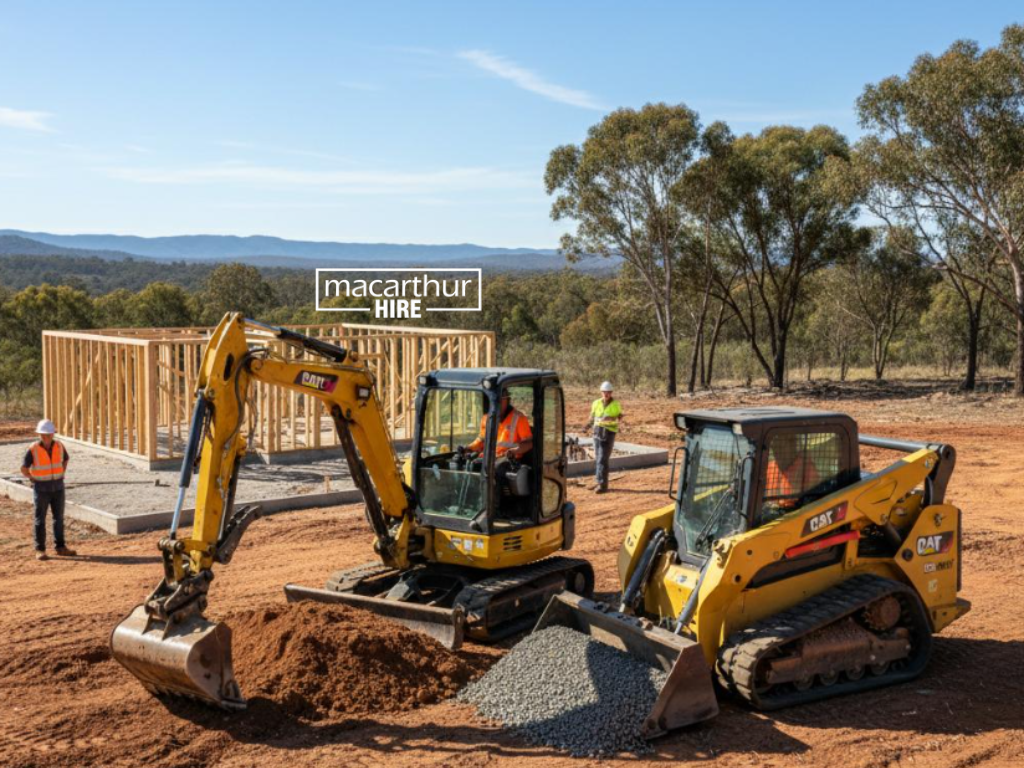
Skid steer loaders are compact machines that can perform different material-handling and site preparation tasks using compatible attachments.
Tracked loaders may also be considered where their specifications suit the site and operating conditions.
When comparing equipment for rent, identify whether the main task involves digging, transporting materials, levelling or loading.
Choosing machinery according to its intended function helps prevent hiring a machine that cannot perform the required work effectively.
Ground compaction is an important stage of many construction and landscaping projects.
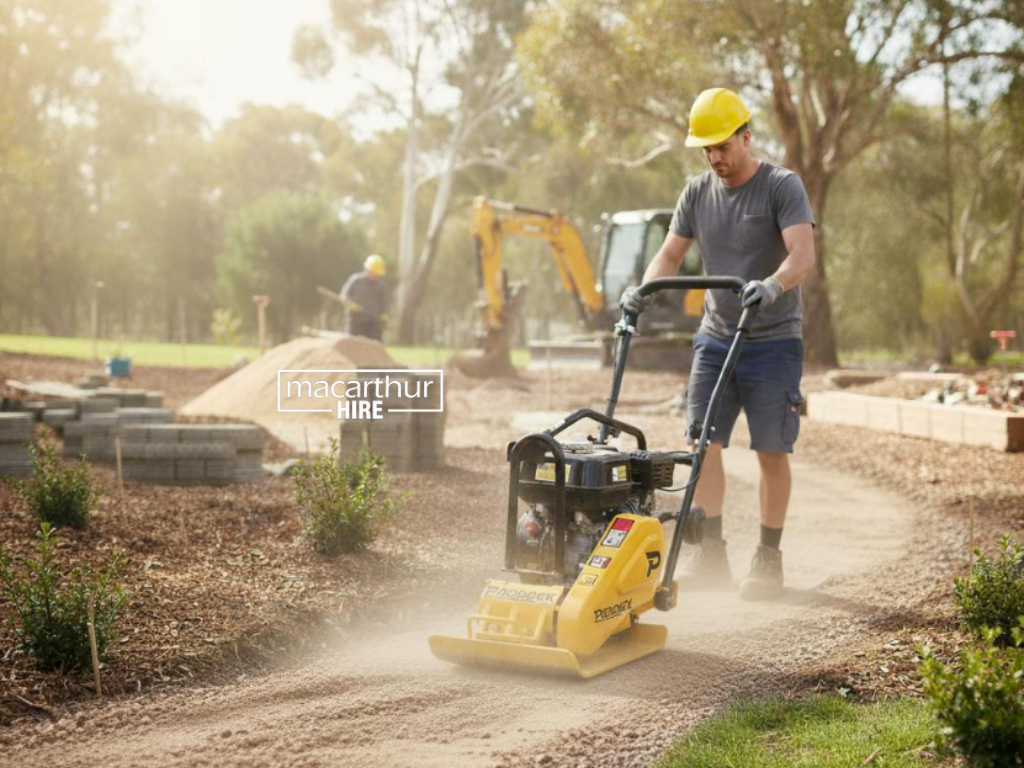
Compaction equipment helps consolidate suitable materials when preparing surfaces for paving, driveways, footpaths and other applications.
Common options include vibrating plate compactors, rammers and rollers.
Plate compactors are often used for compacting suitable granular materials across relatively accessible areas. Rammers can be useful in certain confined spaces and trenches, while rollers are commonly used for larger surfaces.
When arranging construction equipment rental, the type of material being compacted should influence the equipment selection.
For example, a small paving project may have different compaction requirements from a large driveway or commercial site.
The appropriate machine also depends on the required compaction outcome, the depth of each material layer and the manufacturer’s operating specifications.
Not all soil and fill materials respond to compaction in the same way.
Granular materials, cohesive soils and mixed fill may require different compaction methods.
Moisture content, layer thickness and site conditions can also affect the result.
Before arranging equipment rental, identify the material being compacted and the approximate size of the work area.
A narrow trench may require different equipment from an open construction site.
Also consider whether the machinery can be transported safely to the location and whether the operating surface is suitable.
For construction work requiring specified compaction performance, follow the relevant engineering requirements rather than assuming that operating a compactor for a particular period will achieve the necessary result.
Some construction and maintenance tasks require workers to reach areas above ground level.
Elevated work platforms may provide access for activities such as building maintenance, installation work and certain construction operations.
Common equipment types include scissor lifts and boom lifts.
Scissor lifts generally raise a work platform vertically, making them suitable for certain tasks directly above an accessible operating area.
Boom lifts can provide additional horizontal outreach, depending on their configuration.
When considering construction equipment rental for working at heights, assess the required working height, available space, ground conditions and the location of the work.
The equipment must also have an appropriate platform capacity for workers, tools and permitted materials.
Work-at-height hazards require proper risk assessment, and the equipment must be used according to manufacturer instructions and applicable safety requirements.
The main difference between scissor lifts and boom lifts is how they provide access.
A scissor lift is generally suitable when workers need vertical access above a firm, suitable surface.
A boom lift may be more appropriate when workers need to reach across an obstacle or access a position that cannot be approached directly from below.
However, boom lifts require careful consideration of operating space, stability and reach.
When reviewing equipment hire options, confirm the platform’s rated working height, capacity, surface requirements and operating limitations.
Operator competency is essential. In Australia, operating a boom-type elevated work platform with a boom length of 11 metres or more requires the relevant high risk work licence.
Other access equipment may also require specific training and safe operating procedures, even when a high risk work licence is not required.
Customers should confirm these requirements before booking rather than assuming that hiring the machine automatically qualifies someone to operate it.
Equipment specifications help determine whether a machine is suitable for a particular task.
For excavators, important details include digging depth, reach, operating weight, machine width and attachment compatibility.
For loaders, consider rated operating capacity, machine dimensions and the type of material being handled.
Compactors should be assessed according to the material, required compaction performance and operating area.
Access equipment requires attention to working height, outreach where applicable, platform capacity and ground conditions.
When comparing construction equipment rental options, avoid selecting machinery based only on its advertised size.
For example, a machine described as compact may still be too wide for a particular residential access point.
Measure gates, driveways and other restricted areas before booking.
Checking the manufacturer’s specifications and discussing site conditions with the rental provider can help narrow down suitable options.
Choosing the largest machine available is not always the most practical approach.
Oversized machinery may be difficult to transport, manoeuvre or operate within restricted areas.
It may also require more space than the site can safely accommodate.
On the other hand, equipment that is too small may have insufficient digging depth, lifting capacity or working reach.
This can affect productivity and may require a different machine to complete the work.
For construction equipment rental, the aim is to select machinery with adequate capability for the job while remaining suitable for the site’s physical limitations.
For example, a compact excavator may suit a residential landscaping project with restricted access, while a larger excavation job may require greater machine capacity.
Before confirming an equipment rent arrangement, review the actual machine specifications and ask whether the selected model is appropriate for your intended application.
Choosing a suitable equipment provider involves more than comparing advertised daily rates.
A reliable hire arrangement should provide clear information about the machinery, rental period, transport arrangements and customer responsibilities.
When comparing construction equipment rental providers, check whether the required machine and attachments are available for your intended dates.
Ask about equipment specifications, maintenance arrangements and what support is available if a mechanical issue occurs during the hire period.
It is also useful to understand the difference between dry hire and wet hire.
Dry hire generally means renting machinery without an operator, while wet hire generally includes an operator. The precise inclusions should always be confirmed with the provider.
Macarthur Hire offers equipment and vehicle rental services, including excavators, compactors, scissor lifts and other machinery for construction and property-related work.
Customers can explore Macarthur Hire to review its equipment range and enquire about machinery suitable for their project.
Equipment availability, current specifications and rental conditions should be confirmed before booking.
Before accepting an equipment hire agreement, make sure you understand the complete rental arrangement.
Ask how daily, weekend and weekly hire periods are calculated and whether additional charges apply when equipment is returned late.
Clarify delivery and collection costs, security deposits, fuel requirements, cleaning expectations and damage liability.
Some equipment may require additional attachments, which could be charged separately.
If you plan to collect machinery using a trailer, confirm the loaded towing weight, vehicle towing capacity, trailer requirements and applicable road rules.
Operator requirements also need attention.
Some machinery requires specific qualifications or licences, while other equipment requires appropriate competency, instruction and supervision.
Understanding these conditions before collecting the equipment can help prevent unexpected costs and avoidable disruptions.
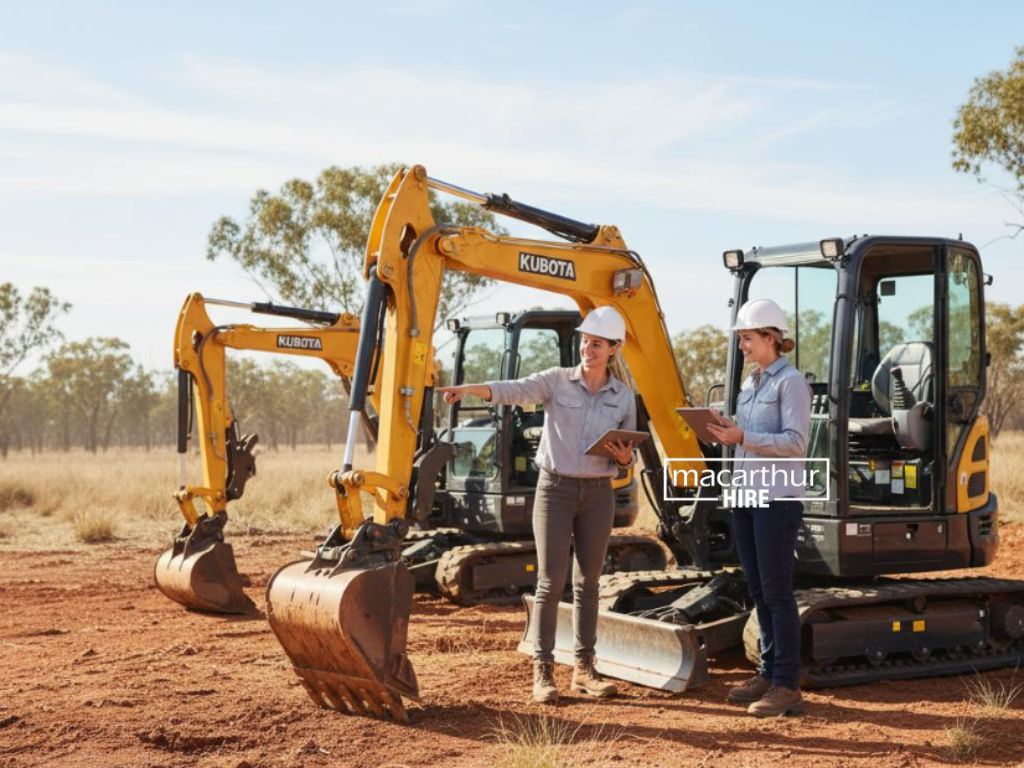
Before machinery arrives, assess whether the worksite is suitable for the planned activities.
Check access routes, available operating space, ground conditions and any obstacles that could interfere with equipment movement.
For excavation work, underground services are a particularly important consideration.
In NSW, current underground services information must be obtained where required before excavation begins. Before You Dig Australia is an important starting point, but available plans must be interpreted appropriately, and additional locating work may be necessary.
Overhead electrical hazards, pedestrian movements and nearby structures should also be considered.
When planning construction equipment rental, ensure that the appropriate site-specific risk assessments and safety controls are in place.
High-risk construction work may require a Safe Work Method Statement, and machinery must only be operated by people with the appropriate competency and any required licences.
Site preparation should be completed before the equipment is delivered rather than left until the hire period has started.
Once you have identified suitable machinery, review the booking details carefully.
Confirm the equipment model, required attachments, hire dates and delivery or collection arrangements.
Check that the selected machine has adequate capacity for the intended work and can safely access the site.
If the project may take longer than expected, ask how rental extensions are handled.
Review the hire agreement and clarify responsibility for fuel, cleaning, equipment damage and breakdown reporting.
For builders, contractors and property owners working across Macarthur and surrounding areas of South Western Sydney, discussing these requirements with an equipment hire provider can help identify suitable machinery.
Macarthur Hire provides equipment rental options for construction, landscaping and other project requirements.
Visit Macarthur Hire to explore available equipment, review relevant specifications and enquire about rental arrangements.
Choosing the right construction equipment rental begins with understanding the job rather than selecting machinery based on size or price alone.
By assessing the worksite, comparing equipment capabilities and confirming hire conditions, customers can make more informed decisions and better prepare for their construction or landscaping projects.