


Choosing between a mini excavator and a standard excavator is not simply a question of which machine is more powerful. The better choice depends on where the machine needs to work, how much material needs to be moved, the depth and reach required, site access, ground conditions and how the equipment will be transported.
For people comparing equipment rental options, these practical details matter more than choosing the largest machine available. A compact excavator may be the better fit for a residential backyard with limited side access, while a larger excavator can make more sense on an open construction site where greater digging capacity and reach are required.
Understanding these differences before booking can help you narrow down the right machine and give the hire company enough information to recommend suitable equipment for the job.
A mini excavator is designed around compact dimensions and easier manoeuvring, while larger excavators generally provide greater digging capability, reach and material-handling capacity. However, those advantages only help when the site has enough room for the machine to enter, position itself and work properly.
This is why overall machine size matters from the moment you begin planning the job. You need to think about machine width, operating space and where excavated soil or other material will be placed.
On a residential property, a machine may need to pass between a house and boundary fence before reaching the work area. On an open commercial site, access may be much less restrictive, allowing a larger excavator to operate without the same space limitations.
The correct equipment rental choice therefore starts with the physical site rather than the machine catalogue.
It is easy to assume that a larger excavator will always finish the job faster, but a machine can only be productive when it suits the work area.
A standard excavator may provide greater reach and capacity, but those benefits can be reduced if the operator has limited space to position or turn the machine. A mini excavator may have less capacity, yet it can be more practical when working between existing structures, around landscaping or in another confined area.
The opposite also applies. Choosing a compact excavator for a large open excavation may mean moving smaller amounts of material over a longer period.
Instead of asking which excavator is best overall, ask which machine is appropriately sized for the particular job.
Access is one of the first things to check when arranging earthmoving equipment for rent.
Do not measure only the final excavation area. Consider the complete route from the delivery point to the place where the machine will work. Gates, side passages, retaining walls, fences, garages, trees, overhead obstacles and existing landscaping can all affect access.
Also consider whether the machine needs to turn during the journey. A passage that appears wide enough when measured in a straight line may still be difficult to negotiate if there is a tight corner.
For Sydney and Western Sydney residential work, these questions can be particularly important where established homes, boundary fencing and neighbouring properties create restricted access.
Providing accurate measurements to the Equipment Hire company before confirming a booking is much easier than discovering on delivery day that the selected excavator cannot reach the work area.
Getting an excavator through the gate is only the first part of the access question.
Once inside the property, the machine needs enough operating room for the work being carried out. Consider the excavation location, boom movement, machine positioning and where material will be placed as it is removed.
The relationship between the excavator and people on the site also matters. SafeWork NSW identifies collisions between mobile plant and people, plant rollovers and contact with underground or overhead services among important risks associated with excavation and earthmoving work.
This means a confined area should not be assessed only by asking whether the excavator physically fits. The work area needs to support safe operation and the controls required for the project.
If measurements are tight or the site layout is unusual, provide photos and dimensions to the hire company before choosing a machine.
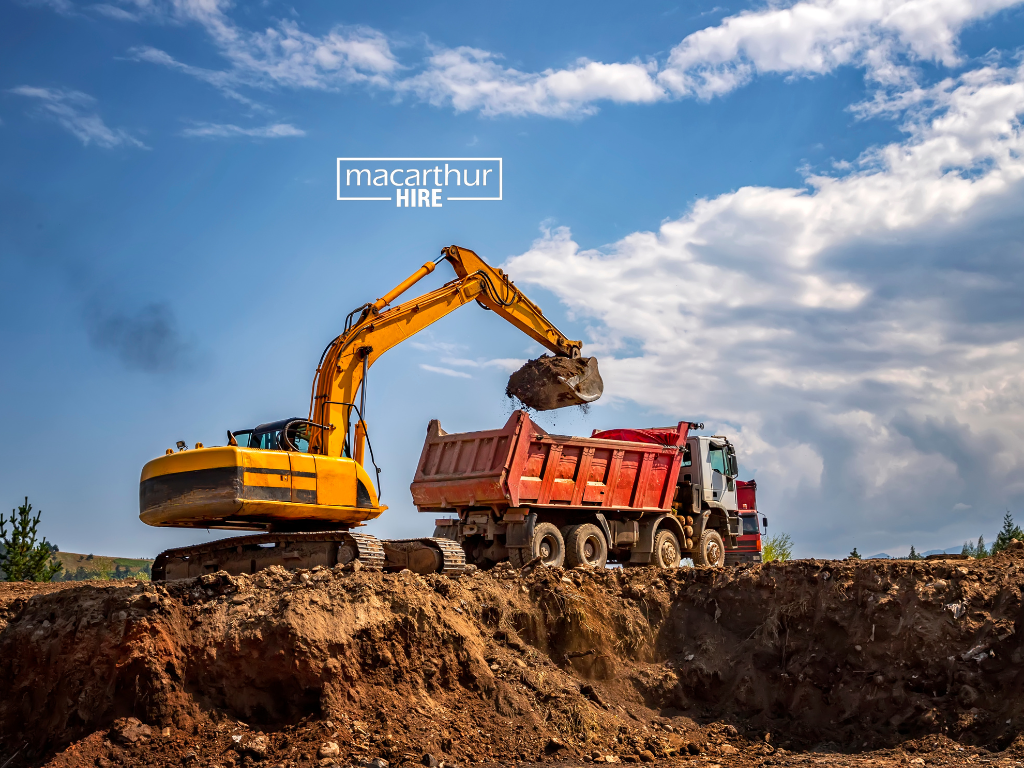
Mini excavators are often considered for smaller excavation work where space and access are major factors.
Typical projects can include landscaping preparation, small trenches, drainage work, garden excavation, soil removal and other residential tasks where a larger machine would be difficult to position.
However, the word “mini” covers more than one machine size. Two compact excavators may have different widths, digging depths, reaches and lifting capabilities.
For that reason, do not choose a machine based only on the category name. When comparing equipment rent options, look at the actual machine specifications and explain the job to the supplier.
A useful starting point is to know approximately how deep you need to excavate, how far the machine needs to reach and what type of material you expect to move.
A larger excavator may become more practical when the work involves a bigger excavation area, greater digging depth, heavier material or a large quantity of soil that needs to be moved.
Open construction sites can also provide the room needed to take advantage of a larger machine’s working capacity.
The key question is whether the additional machine size provides a real benefit for the job. If a site is open and there is substantial excavation to complete, selecting a machine with greater capability may improve productivity. If the project is small and surrounded by existing structures, that additional size may create more problems than it solves.
The type of material also deserves consideration. Loose soil, compacted ground and other site conditions can place different demands on the machine.
This is another reason to describe the actual project when you rent equipment rather than booking solely by excavator size.
Excavators need to be transported to and from the worksite, so delivery should be considered as part of the hire decision.
Machine size can influence the transport arrangement, where unloading can occur and how much space is required around the delivery area. A property may have plenty of room for excavation at the rear but limited street or driveway access for delivering the machine.
Before booking, confirm where the equipment can be unloaded and how it will move from that point to the work area.
You should also clarify delivery and collection arrangements with the supplier rather than assuming they are automatically included in the advertised hire rate.
When comparing equipment rental providers, the most useful price is the cost of getting the right machine onto your site for the required period, not simply the lowest displayed daily rate.
Ground conditions can influence both machine selection and how the work should be planned.
Slopes, soft ground, excavation edges and uneven surfaces require particular attention because they can affect plant stability. SafeWork NSW identifies ground assessment, plant rollovers and working near excavation edges as important issues when earthmoving equipment is being used.
Underground services also need to be addressed before excavation begins. SafeWork NSW states that current essential-services information must be obtained before excavation work starts, and it directs users to Before You Dig Australia for underground asset information.
Before You Dig Australia provides a free referral service through which people planning excavation can request plans and information from participating utility asset owners.
This preparation is separate from choosing the excavator, but it belongs in the same planning process. The right machine cannot make an unprepared site safe.
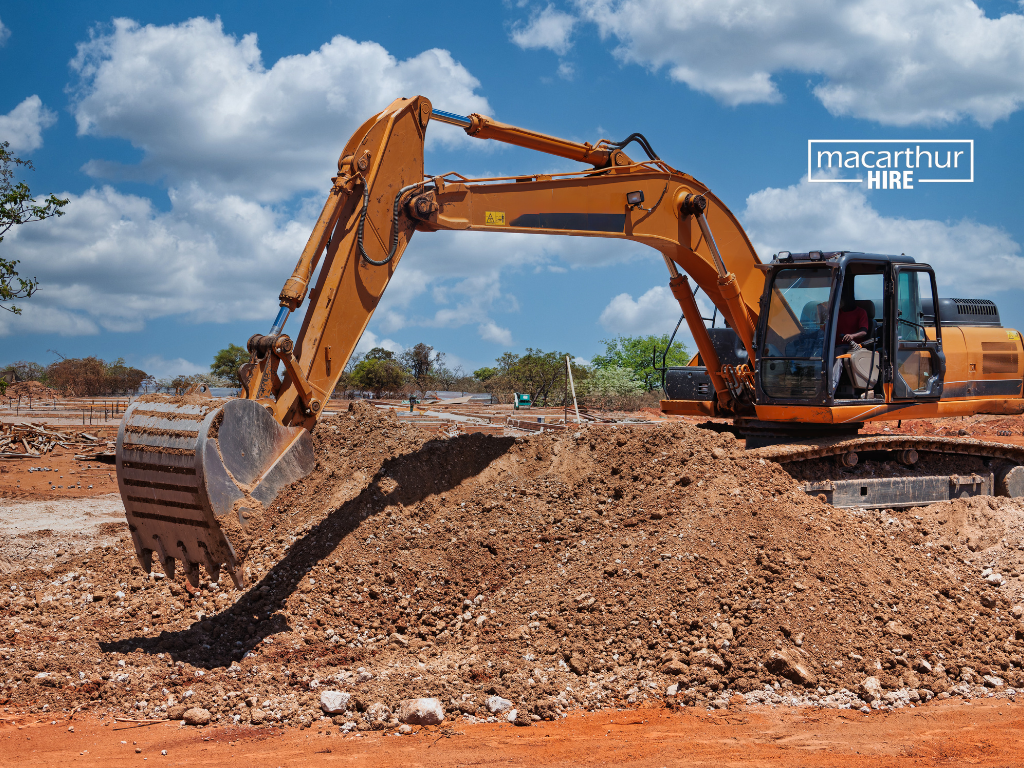
A useful way to choose an excavator is to work backwards from what needs to be achieved.
Consider the access route, work area, approximate excavation depth, amount of material to move and how far the machine needs to reach. Think about whether spoil will remain beside the excavation, be loaded into another vehicle or moved elsewhere on the property.
Attachments should also be discussed where relevant. Different excavation, drilling or material-handling tasks may require different attachments, and availability varies between suppliers and machines.
Once those requirements are clear, you can compare the machines that meet them.
This approach is more useful than starting with the cheapest equipment for rent and trying to make the project fit around it.
If two machines can both perform the work, access, operating space, delivery and expected productivity can then help you narrow down the better choice.
Price matters, but it should be considered alongside the ability of the machine to complete the work effectively.
A smaller machine with a lower daily rate is not necessarily the cheaper option if the job takes considerably longer. In the same way, paying for a much larger machine provides little value when site restrictions prevent you from using its additional capacity.
Hire duration also affects the decision. If you expect the work to take several days, ask the supplier how its daily and longer-term hire arrangements work.
Clear rental conditions are important as well. Confirm what the hire price covers, the agreed hire period, transport arrangements, fuel requirements, attachments and any conditions that apply to operation or return.
For businesses, the same thinking applies to business equipment hire. Contractors and landscapers should consider how the machine fits the project schedule and site requirements rather than looking at the hire rate in isolation.
Construction, landscaping and maintenance businesses do not necessarily need the same equipment on every project.
One job may involve a compact residential site where a smaller excavator is appropriate, while another may require different earthmoving equipment or access machinery.
This is where business equipment rental can provide flexibility. Instead of selecting equipment based on what the business already owns, the project team can look for machinery suited to the particular job.
When comparing business equipment rentals, check whether the provider carries the categories of equipment your projects regularly require and whether the service area suits your worksites.
Macarthur Hire currently lists earthmoving equipment as part of its range, including a Kubota excavator, alongside other categories such as lawn and landscaping equipment, scissor lifts, site services, trailers and hire vehicles.
For projects in the Macarthur and surrounding Sydney areas, that makes the company one relevant option to compare when a job needs more than one type of hire equipment.
Even when a supplier offers excavators, the important question is whether the available model suits your project.
Ask about machine dimensions, digging capability, availability, attachments and transport arrangements. Then compare those details with your site measurements and work requirements.
Macarthur Hire currently lists a Kubota U55-4 Excavator on its equipment rental website, but customers should still confirm current availability and whether that particular machine is suitable for the intended site and task before booking.
This is a useful principle for any supplier. Online equipment information can help narrow the options, but the final decision should be based on the current machine offered for the dates and job you have planned.
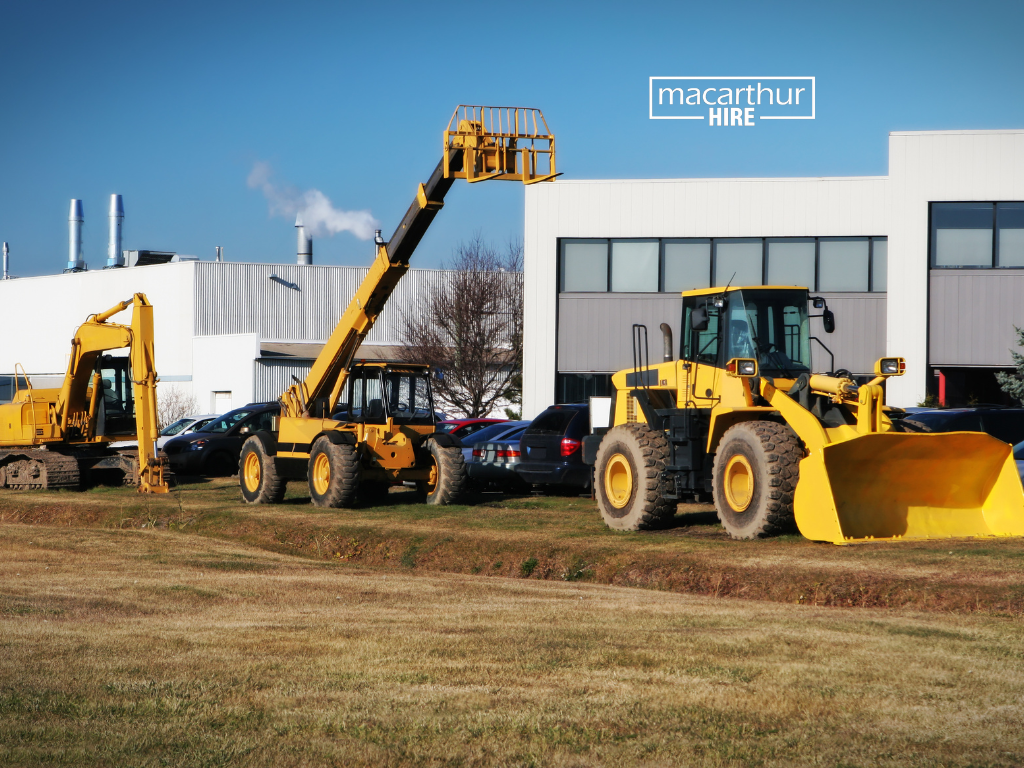
It is worth contacting the hire company before booking when you are unsure which excavator size is appropriate.
This is especially important when access is narrow, the machine needs to move through several restricted areas, excavation depth is uncertain, ground conditions are difficult or the job may require a specific attachment.
Instead of simply saying you need an excavator, describe what you are trying to achieve.
Explain the type of work, approximate excavation depth, site location, access width, expected hire period and any physical restrictions around the work area. Photos can also help the supplier understand a residential or confined site.
Macarthur Hire’s current range includes earthmoving equipment, and its website specifically presents equipment rental for construction, landscaping and other project needs. Contacting the company with clear project information gives its team a better basis for discussing whether the available equipment suits the job.
Before finalising equipment rental, make sure you know what machine is being supplied and how it will reach the work area.
Recheck access measurements, delivery arrangements, hire dates and the attachments you expect to use. If excavation is involved, make sure underground-service information and the required site safety planning have also been addressed before work begins.
For commercial users arranging business equipment rental, it is also worth confirming who will operate the equipment and whether they have the information, training and competency required for the work. SafeWork NSW states that operators of earthmoving plant must be competent and provided with appropriate information, instruction, training and supervision.
Ultimately, choosing between a mini excavator and a standard excavator comes down to matching the machine to the site.
A compact machine can be valuable where access and working room are limited, while a larger excavator may be more practical where the project demands greater capability and there is enough space to use it properly.
Measure first, understand the excavation requirements and then discuss those details with the equipment rental provider. That gives you a much better basis for choosing the right machine than simply selecting the smallest, largest or cheapest option available.